2 Know the professional roles within a
chosen area of the music industry
Live
performance: eg
performer/artist, DJ, agent, promoter, venues and stage management,
crew/technicians, security, merchandise
Record
companies: eg
A&R, promotion, distribution and retail, merchandising
Music
publishing companies: eg
publishing, copyright, sales, composer and artist development
Artist
management: eg
artists, songwriter/composer, manager
Working
patterns for each role:
sessional; freelance
Contracts: benefits; constraints, including legal
requirements for performance/recording studios, such as the issue of health and
safety, which is covered by the Health and Safety at Work Act.
Live performance
Performer/artist
Within a live performance, the performer/artist is probably one of the most important and vital part to the live performance. Without them there wouldn't even be a live performance. For example if it's a live performance for a solo performer, for someone like Gabrielle Aplin who is a solo artist then session musicians is something that may be needed. Or sometimes as their career progresses they will find people who they use for every gig that they take part in and they will end up being their backing band. A lot of solo artists now have a band which they tour with and they support them.
They may also have backing vocalists which will normally be found by their managers etc but the artist will still usually be involved in this process.
Sometimes depending on the style of music there will also be backing dancers who are involved, they will have auditioned to become apart of the live performance.

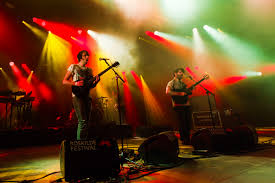
Session musicians
Session musicians are people who get hired to literally play their instrument with a band/solo artist. They'll normally be hired when the artist has a gig/live performance and they need a band backing them. The session musicians will always be able to read music very well and they sometimes don't even get the chance to rehearse it and they just play along whilst reading the music. This is very challenging. Most times they will get given the sheet music before hand in which they can practice in their own time, with just a few rehearsals. It is a lot of commitment. They may do session work for backing tracks, adverts and films, conduct performances or actually write music.

Within a live performance, the performer/artist is probably one of the most important and vital part to the live performance. Without them there wouldn't even be a live performance. For example if it's a live performance for a solo performer, for someone like Gabrielle Aplin who is a solo artist then session musicians is something that may be needed. Or sometimes as their career progresses they will find people who they use for every gig that they take part in and they will end up being their backing band. A lot of solo artists now have a band which they tour with and they support them.
They may also have backing vocalists which will normally be found by their managers etc but the artist will still usually be involved in this process.
Sometimes depending on the style of music there will also be backing dancers who are involved, they will have auditioned to become apart of the live performance.
Session musicians
Session musicians are people who get hired to literally play their instrument with a band/solo artist. They'll normally be hired when the artist has a gig/live performance and they need a band backing them. The session musicians will always be able to read music very well and they sometimes don't even get the chance to rehearse it and they just play along whilst reading the music. This is very challenging. Most times they will get given the sheet music before hand in which they can practice in their own time, with just a few rehearsals. It is a lot of commitment. They may do session work for backing tracks, adverts and films, conduct performances or actually write music.
Being a session music you hold a lot of responsibility, if you go wrong and aren't on point it could get picked up on and they could potentially ruin the performances, this could be seen as a negative for being a session musician and some may say it's not worth it. Positives about being a session musician is I believe it brings you great experience and opportunities and is a really good way to gain confidence as you are under a lot of pressure.
DJ
Depending on the style of the night, and what the event is then a DJ could perhaps be hired. There are many types of DJs:
- Club DJs, they work in bars etc and they often support MC's, they also mix music
- Radio DJ's, they sometimes help to choose music which is played, do interviews etc
- Mobile DJs, these people work at parties and special events, they will always unload and set up their own equipment
DJs will have a style of genre that they will usually stick to and you will be able to notice this within their sets. Their style normally develops over time, this could be, house, garage, dance music etc, or sometimes they will play music to suit the event that they are playing at, for example a wedding or a family party. Being a DJ can be a really stressful job because they are nearly almost taking a risk with the music that they put together and create a set with, they need to know their market and their target audience so research is something they must do a lot with. DJ's need to be crowd pleasers and be able to handle pressure.
DJs are normally self employed and they are in charge of the organisation of everything that they do. They're in charge oft he finance and promotion. If the DJ is on a much higher level then they would normally have an agent, agents are people who book gigs and arrange the travel for these gigs.
DJs are likely to only earn from about £50-£300 per session that they do, but it really does depend on how known they are which will normally decide on how much income they earn. If they're a DJ which is constantly wanting to be hired then they will earn more per session as they are on demand.
DJ'ing is harder than people think, you need to be able to use equipment, this could be turntables or vinyl, microphones, amplifiers, sound mixers, headphones, speakers and lights etc. DJs normally have all this equipment for themselves and they will bring them to the events. Club DJs usually use laptops and computer software so that they're able to play and edit their music live.


Agent
A music agent is someone who booked live personal appearances for musicians and for bands. They will negotiate contracts to help the band get other types of work, things like, radio and television appearances, and also on adverts. Booking a performance/concert at a club etc is much more difficult then just phoning them and arranging it. The agent will become familiar with venues and relationships will be built with concert promoters and then bands will be booked into places which suits them the best and the best way to have their music promoted and their talent to be noticed.
Agents know what they're talking about and they will try their very best to get the best deal that they can for the bands that they are working for.
Agents will receive a percentage of the bands income from their performance.
The typical day for a music agent:
Agents know what they're talking about and they will try their very best to get the best deal that they can for the bands that they are working for.
Agents will receive a percentage of the bands income from their performance.
The typical day for a music agent:
- Clear voice mails and emails
- Make calls constantly to venues
- Create a route for the tour etc
- Get offers from promoters, things like, how much money the band will get from it
- Review the offers with the bands manager
- Choose the deals to accept, by looking into more detail and seeing which one works best
Being an agent is a very difficult and hard job and you have to have a real passion for music and share complete dedication and motivation. Positives of being an agent is you get a lot of publicity and you get to meet a lot of new people and constantly involved in the music industry cycle, if this is something you love to be involved in then this job would be perfect. Negatives could be that you are extremely busy and always need to be looking for venues, be very organised, and it's important to have contacts and know who to speak to to arrange events.
Promoter
Promoters are basically the people that bring in the majority of the crowd. They do this by giving out flyers and leaflets, sticking up posters around outside and indoors. Putting handbills on windows of cars which are parked in entertainment districts. Promoters will always keep mailing lists, this is usually email lists, for potential and likely customers. Promoters nowadays, because the sources are there, they often promote on websites, like Facebook and Twitter, creating events and groups. This is a great way of promoting because fans are likely to share and then continue to promote.


Promoters are basically the people that bring in the majority of the crowd. They do this by giving out flyers and leaflets, sticking up posters around outside and indoors. Putting handbills on windows of cars which are parked in entertainment districts. Promoters will always keep mailing lists, this is usually email lists, for potential and likely customers. Promoters nowadays, because the sources are there, they often promote on websites, like Facebook and Twitter, creating events and groups. This is a great way of promoting because fans are likely to share and then continue to promote.
The reason why promoting on social networking sites has become so popular is because a lot of the population are using these kinds of websites now. It's also a much more easier and convenient way of promoting and it's free. Also, you can be much more direct with the kind of audience you are wanting to promote towards.
Venues and stage management
I found a really helpful website which explained the day in the life of a stage manager: http://www.rwcmd.ac.uk/other/news/inside_view/venue_13_-_a_day_in_the_life.aspx
Stage managers are the people who will deal with the problems that happen throughout the day. People say they are the glue to productions.They are relying on the production that they are working on for them to then get things to do from that. They sweep and maintain the stage to ensure everything is organised and tidy. They will also:
I found a really helpful website which explained the day in the life of a stage manager: http://www.rwcmd.ac.uk/other/news/inside_view/venue_13_-_a_day_in_the_life.aspx
Stage managers are the people who will deal with the problems that happen throughout the day. People say they are the glue to productions.They are relying on the production that they are working on for them to then get things to do from that. They sweep and maintain the stage to ensure everything is organised and tidy. They will also:
- Prep the set
- Running LX/SF
- Write show reports
Stage managers often get these status' by having worked as an Assistant stage manager/deputy stage manager, and they usually then move onto work as Company Stage Managers and Production Managers.
If you are a stage/venue manager it's important to be calm, professional and very organised and it's vital to have good knowledge on stagecraft and know how to manage others.
Stage managers will always need to have everyone's contact numbers to ensure good communication is always used.
They will also need to be in charge of taking notes of everything that is going on, you will always see them walking around with a pen and note pad.There are things called stage terms, these are things like abbreviated terms which you'd use when writing on scripts etc, stage managers need to be familiar with these and know them. This will make it easier when writing notes and will be a much faster and more convenient way of doing this.
It's important for stage managers to also be up for a laugh and keep the team motivated and on time for everything.
TECH! Stage managers must know how to use the technical equipment, sound effects equipment just in case you are needed to step in if there is an emergency.


Crew/technicians
The technical crew is also known as 'tech crew' or 'technicians'. These people are the people who are hired that work behind the scenes backstage of a live performance. They will control all of the technical side that creates the concert/production/play/music or anything else that is considered a live performance. The group of people that all add up together to create the 'tech crew' is usually around 13 or more members and if the production is very big then there will be more than one person designated to each job. These will be:
The technical crew is also known as 'tech crew' or 'technicians'. These people are the people who are hired that work behind the scenes backstage of a live performance. They will control all of the technical side that creates the concert/production/play/music or anything else that is considered a live performance. The group of people that all add up together to create the 'tech crew' is usually around 13 or more members and if the production is very big then there will be more than one person designated to each job. These will be:
- Stage manager
- Props
- Back-stage crew
- Lighting desk operator
- Followspot(s)
- Master electrician
- Deck electrician
- Sound desk operator
- Sound manager
- Mic manager
- Stage hand
- Flymen
Without this group of people the live performances wouldn't be the same and they most definitely wouldn't run smoothly, they wouldn't run at all. All the crew members have a massive responsibility. They will make sure the stage is fine to play on, everything is in the correct places and everything is running on time etc, the list is endless.
It also depends on the type of live performance that is taking place. If it a fairly small one and is just a simple theatre production then it may only need one person and they will deal with everything, from lighting to sound and music, whereas if it is a really bad live performance there could be hundreds of individuals within the tech team.
The technical team are always the first people to be there, and pretty much always the last to leave.

Security
Security are here to ensure that musicians and their fans are kept safe, and they're also here to make sure that the venue is safe and is protected from vandalism and theft etc. There are two types of security. Security for the venue/area where the performance is taking place, or for the actual performer itself.
When holding a live performance it's important that there is security, but this really depends on how big the event is. For example, if it was held in a pub, then security probably isn't necessary, but if it was in the O2 academy in London then this is something that would be needed.
Security for the artists/band could be something that is needed depending on their level of fame and how well known they are, and what kind of artist they are. For example, if there was a show with Beyonce, she is a massive world wide artist, security would be vital for her. But if it was for a small band, like Daughter, then security probably isn't something that is needed, they are a well respected band but not I'd say they are considered as underground artists.
Some security will stand at the entrance of a venue and they will keep a look out for any bad behavior or anything that happens that shouldn't be happening, for example fights. Some other types of security will be stood or sat by/on the stage to protect the musicians that are performing on stage, they will be able to prevent any one from attempting to get onto the stage that doesn't have permission to do so.
Security guards are also used for places such as, buildings, hospitals, colleges etc.
It's important for security guards to have good communication skills as this is basically what the job consists of. Strength and endurance is a very important aspect of being a security guard, having an unfit security guard that couldn't hold a person back or run for 10 yards would be pretty pointless.
Negatives of being a security guard:


Some security will stand at the entrance of a venue and they will keep a look out for any bad behavior or anything that happens that shouldn't be happening, for example fights. Some other types of security will be stood or sat by/on the stage to protect the musicians that are performing on stage, they will be able to prevent any one from attempting to get onto the stage that doesn't have permission to do so.
Security guards are also used for places such as, buildings, hospitals, colleges etc.
It's important for security guards to have good communication skills as this is basically what the job consists of. Strength and endurance is a very important aspect of being a security guard, having an unfit security guard that couldn't hold a person back or run for 10 yards would be pretty pointless.
Negatives of being a security guard:
- It can be quite a risky job and you could get hurt, from the people around you that are in fights etc
- Have to learn to deal with people perhaps being rude and disrespectful towards you
- Late nights depending on the job you're doing, e.g clubs, bars, concerts
- Long hours
- Away from home for a long time
Positives of being a security guard:
- Some say it's quite good pay
- Get to meet new people
- Get access to watch live music
- Get to travel around, especially if you're followings bands on tour

Within a live performance there will always be someone, or a team who takes charge of the merchandise that the artist/band has to offer when they're doing a live performance. These are things like, t shirts, cds, posters, accessories. They will be in charge of selling the merchandise and also getting hold of the merchandise.
A lot of the time the merchandise sold at concerts is where a good amount of the artist/bands income comes from. People think that it looks like a very straight forward process, a few tops with the bands name on it, or a key ring with a picture of the band, but it's much more difficult and expensive than it seems. The more fans you get the more confusing it all becomes.
If you're not signed to anyone and just a band who manages them self then getting the stock usually is pretty straight forward but can still be pricey but usually they're made by them self or their manager. The band/artist will usually keep all the money or it will go towards the venue they paid at.
Once you begin touring a lot it may soon become time to hire a merch person who is in charge of all of it. They'll handle the money, accounting and selling of the merch.
Then once you get even bigger you may get merchandise companies getting in touch with you and they'll want to take over. This is when designers etc get involved. Before signing a merchandise deal it's a good idea to talk through everything in detail and your manager would usually take a big part of the control of this.
I found a very good website which explains a lot about merchandise within a tour:
http://musicians.about.com/od/playinglive/f/How-Does-Tour-Merchandising-Work.htm


The benefits of having a contract are:

constraints,including legal requirements for performance/recording studios,
such as the issue of health and safety,
which is covered by the Health and Safety at Work Act.
If you're not signed to anyone and just a band who manages them self then getting the stock usually is pretty straight forward but can still be pricey but usually they're made by them self or their manager. The band/artist will usually keep all the money or it will go towards the venue they paid at.
Once you begin touring a lot it may soon become time to hire a merch person who is in charge of all of it. They'll handle the money, accounting and selling of the merch.
Then once you get even bigger you may get merchandise companies getting in touch with you and they'll want to take over. This is when designers etc get involved. Before signing a merchandise deal it's a good idea to talk through everything in detail and your manager would usually take a big part of the control of this.
I found a very good website which explains a lot about merchandise within a tour:
http://musicians.about.com/od/playinglive/f/How-Does-Tour-Merchandising-Work.htm
Contracts
BenefitsThe benefits of having a contract are:
- It shows you the ins and out of what you're signing up for
- It basically has your back to prove anything if the people you are signing the contract with mess you about and you have signed a legal form
If you sign up to something without actually signing up for it then there's a risk it might not be legit and without having it legally signed for on paper then it would be hard to claim anything you are owed/prove if you have been tricked into doing something you thought was something different. Having a contract will just make you feel more confident and comfortable with what it is you are doing. In this case, an artist might get signed to a record deal, when they are signed to this record deal that means that there are rules and regulations which need to be followed by both parties, which is the person that has been signed and the person signing up the artist. Having it on written legal documents it allows each person to know where they stand and what to expect. It's very important to read everything with great detail so that you don't miss anything; missing something in small writing could cause confusion and signing the record label could have been a mistake and not the right label for you as you've missed something out which could have been the difference between you signing and agreeing to the contract or not.
The size of the record labels would normally decide on the strictness of the contract. If it's a big label like universal there would most likely be much more to read and a lot more rules compared to being signed to an independant record label.
constraints,including legal requirements for performance/recording studios,
such as the issue of health and safety,
which is covered by the Health and Safety at Work Act.

No comments:
Post a Comment